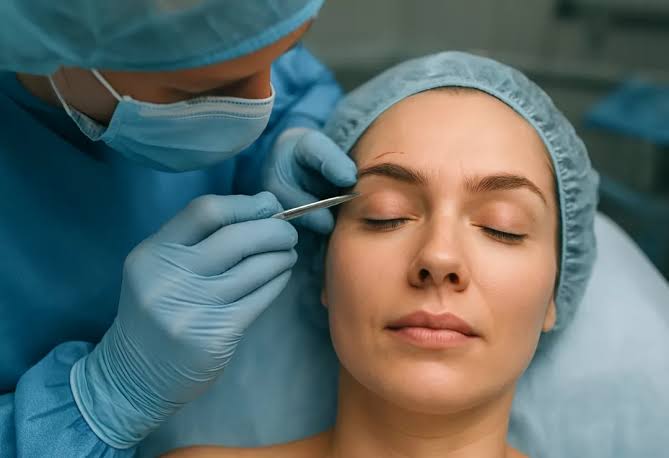
The appearance of the forehead and eyebrows can change gradually as a person grows older. Fine lines, forehead wrinkles, and drooping eyebrows may develop over time, making the upper face appear tired or less refreshed. These changes can influence facial expressions and the overall appearance of the eyes.
Brow Lift Surgery in Dubai is a cosmetic procedure that helps elevate a low eyebrow position, smooth forehead wrinkles, and create a more refreshed facial appearance. However, the best age for this procedure is not determined by a particular number. It depends on individual facial anatomy, skin elasticity, eyebrow position, and personal aesthetic goals. Understanding the available surgical and non-surgical treatments can help individuals make informed decisions about improving their upper facial appearance.
Understanding the Best Age for Brow Lift Surgery
There is no universally recommended age for a brow lift because every individual experiences facial ageing differently. Some people develop naturally low eyebrows at a younger age, while others notice significant forehead changes later in life. The decision generally depends on whether eyebrow position or forehead changes create an appearance that an individual wishes to improve.
Many people consider this procedure when they begin noticing:
- Drooping or low-positioned eyebrows.
- Deep horizontal forehead lines.
- Frown lines between the eyebrows.
- A tired or unhappy facial expression.
- Reduced visibility of the upper eyelids due to brow descent.
- Loss of firmness around the forehead and temples.
A professional facial assessment helps determine whether surgery is appropriate and which technique may address the individual’s concerns.
Is Brow Lift Surgery Suitable for People in Their 20s?
People in their twenties generally have good skin elasticity and stronger natural facial support. Therefore, most individuals in this age group do not require a surgical brow lift solely because of ageing.
However, some younger adults naturally have low eyebrows or asymmetrical brow positions. Others may experience noticeable forehead lines because of repeated facial movements or individual anatomical characteristics.
A brow lift may be considered when a person’s eyebrow position creates a persistent aesthetic concern and the expected benefits justify undergoing surgery. The decision should be based on facial structure rather than age alone.
Is the 30s a Suitable Age for a Brow Lift?
During the thirties, some individuals begin noticing early changes in their forehead and eyebrow area. Skin elasticity may gradually decrease, and repeated facial expressions can make forehead lines more noticeable.
People in this age group may consider a brow lift when they experience:
- Early eyebrow descent.
- Noticeable frown lines.
- Persistent forehead creases.
- A naturally heavy appearance around the eyes.
- Changes in eyebrow symmetry.
Not everyone in their thirties needs surgery. Individuals with mild concerns may benefit from non-surgical approaches, depending on their facial anatomy and treatment goals.
Is the 40s the Most Common Age for Brow Lift Surgery?
The forties can be a suitable period for individuals who experience visible changes in their upper facial appearance. During this stage, reduced skin elasticity and gradual changes in underlying tissues may contribute to lower eyebrows and deeper forehead lines.
A brow lift can help reposition the eyebrows and create a smoother forehead appearance. It may also improve the relationship between the eyebrows and upper eyelids.
Individuals considering the procedure during this decade should receive an assessment of their forehead, eyebrow position, skin condition, and eyelid anatomy. This helps establish whether a brow lift alone can achieve their desired outcome.
Can People in Their 50s and 60s Have a Brow Lift?
People in their fifties and sixties may also be suitable candidates for brow lift surgery. Ageing can become more noticeable around the forehead, temples, and eyebrows, resulting in heavier-looking upper facial features.
The procedure may help:
- Elevate naturally descended eyebrows.
- Improve the appearance of forehead wrinkles.
- Create a more open-looking upper eye area.
- Restore a balanced eyebrow position.
- Provide a refreshed and natural-looking facial appearance.
Chronological age is not the only factor considered. General health, skin condition, medical history, healing ability, and realistic expectations are important when determining suitability.
What Are the Two Main Brow Lift Treatment Options?
Understanding the available treatment approaches is important because not every individual requires the same level of correction. Brow concerns can be addressed through surgical and non-surgical methods, depending on the severity of eyebrow descent and the desired outcome.
Surgical Brow Lift
A surgical brow lift is designed to elevate the forehead and eyebrow tissues into a more desirable position. It may be recommended for individuals experiencing noticeable eyebrow descent, deeper forehead wrinkles, or changes in upper facial structure.
Different surgical techniques can be selected according to the individual’s anatomy and treatment objectives.
Endoscopic Brow Lift
An endoscopic brow lift uses small incisions hidden within the hairline. A small camera and specialised instruments help the surgeon access and reposition the underlying tissues.
This approach may be suitable for individuals who require eyebrow elevation with smaller incisions.
Coronal Brow Lift
A coronal brow lift involves an incision across the scalp, generally positioned behind the hairline. Through this incision, the forehead tissues can be lifted and repositioned.
This technique may be considered for individuals requiring more extensive forehead and eyebrow correction.
Temporal Brow Lift
A temporal brow lift focuses primarily on the outer portion of the eyebrows. It can help elevate the eyebrow tails and improve the appearance of the outer eye area.
The appropriate technique depends on eyebrow position, forehead anatomy, hairline characteristics, and the amount of correction required.
Non-Surgical Brow Lift
A non-surgical brow lift uses injectable treatments to create a subtle elevation or improve the appearance of the eyebrow area without traditional surgery.
Botulinum Toxin Brow Lift
Botulinum toxin injections can temporarily relax selected muscles responsible for pulling the eyebrows downward. This may allow the muscles that elevate the eyebrows to create a subtle lifting effect.
The treatment is generally considered for individuals with mild eyebrow concerns who prefer a temporary approach.
Dermal Filler-Based Brow Enhancement
In selected cases, dermal fillers may be used to provide support and improve contour around specific areas of the forehead and temples. However, fillers do not reproduce the same tissue repositioning achieved through surgery.
The suitability of injectable treatments depends on facial anatomy and individual treatment goals.
What Factors Determine the Right Age for a Brow Lift?
Age is only one consideration when evaluating whether someone is ready for eyebrow enhancement. Several other factors help establish the most appropriate treatment timing.
Skin Elasticity: Individuals with good skin elasticity may have different treatment requirements from those experiencing significant skin laxity.
Eyebrow Position: Naturally low eyebrows or age-related descent can influence whether treatment is appropriate.
Forehead Wrinkles: The depth and location of forehead lines help determine the type of correction that may be beneficial.
Facial Anatomy: Forehead proportions, eyelid structure, hairline position, and eyebrow symmetry influence treatment planning.
General Health: Overall health and medical history are important considerations before undergoing surgery.
Personal Expectations: Individuals should understand what a brow lift can realistically achieve and whether their goals are appropriate.
How Does the Brow Lift Procedure Work?
The treatment process begins with an assessment of the forehead, eyebrows, and surrounding facial structures. The selected approach depends on the individual’s concerns and whether surgical or non-surgical correction is more suitable.
For surgical treatment, the process generally includes:
- An initial consultation and facial examination.
- Selection of an appropriate brow lift technique.
- Preparation for the procedure.
- Administration of suitable anaesthesia.
- Carefully planned incisions according to the chosen technique.
- Elevation and repositioning of the forehead and eyebrow tissues.
- Closure of incisions to complete the procedure.
Non-surgical treatment generally involves assessing facial movement, identifying suitable injection points, and administering carefully measured injections.
Both approaches aim to improve eyebrow positioning while maintaining natural facial expressions.
What Benefits Can a Brow Lift Provide?
A brow lift can improve the overall appearance of the upper face by addressing changes around the forehead and eyebrows.
Potential aesthetic benefits include:
- A more elevated eyebrow position.
- A refreshed and rested facial appearance.
- Smoother-looking forehead contours.
- Improved appearance of frown lines.
- Better balance between the forehead and eyebrows.
- A more open-looking upper eye area.
The results depend on the selected treatment, individual anatomy, and the extent of the original concerns.
Frequently Asked Questions
What Is the Youngest Age for Brow Lift Surgery?
There is no universal youngest age for cosmetic brow lift surgery. It is generally considered for adults with suitable facial development, appropriate indications, and realistic expectations.
Is 35 Too Early for a Brow Lift?
Not necessarily. Some individuals develop noticeable eyebrow descent or naturally low eyebrows during their thirties. Suitability depends on facial anatomy and the severity of the concern.
Is 50 a Good Age for a Brow Lift?
Yes. Individuals around 50 may be suitable candidates if they have forehead wrinkles, eyebrow descent, or changes in upper facial appearance.
Does a Brow Lift Make Someone Look Younger?
A brow lift can create a more refreshed appearance by elevating descended eyebrows and improving forehead contours. The degree of visible improvement varies between individuals.
How Long Do Brow Lift Results Last?
Surgical results can last for many years, although natural ageing continues. Non-surgical results are temporary and depend on the injectable treatment used.
Can a Brow Lift Improve Drooping Eyelids?
A brow lift may improve the appearance of upper eyelid heaviness caused by low eyebrows. However, actual excess eyelid skin may require a separate assessment for eyelid surgery.
Is a Surgical Brow Lift Better Than a Non-Surgical Treatment?
The appropriate approach depends on the individual’s concerns. Surgery can reposition underlying tissues, while non-surgical treatments generally provide temporary and more subtle changes.
Conclusion
The best age for a
Brow Lift Surgery depends on individual facial characteristics, eyebrow position, skin elasticity, and aesthetic expectations rather than a specific age limit. Individuals in their thirties, forties, fifties, and sixties may all be suitable candidates when their concerns and overall health support treatment. Surgical options, including endoscopic, coronal, and temporal techniques, can address different degrees of eyebrow descent, while non-surgical approaches may provide subtle and temporary enhancement. Understanding both treatment options allows individuals to make informed decisions and choose an approach that supports balanced, natural-looking facial features. A personalised assessment remains essential for determining the most appropriate treatment and timing.